Taking AI from pilot to production in regulated banks, with the controls built in.
Executive Director and Distinguished Engineer at Wells Fargo. Over two decades building enterprise AI, data and cloud platforms across financial services and global industry. I write about governed AI, the AI-native software lifecycle and the platforms that make both work.

New · Knowledge Foundation
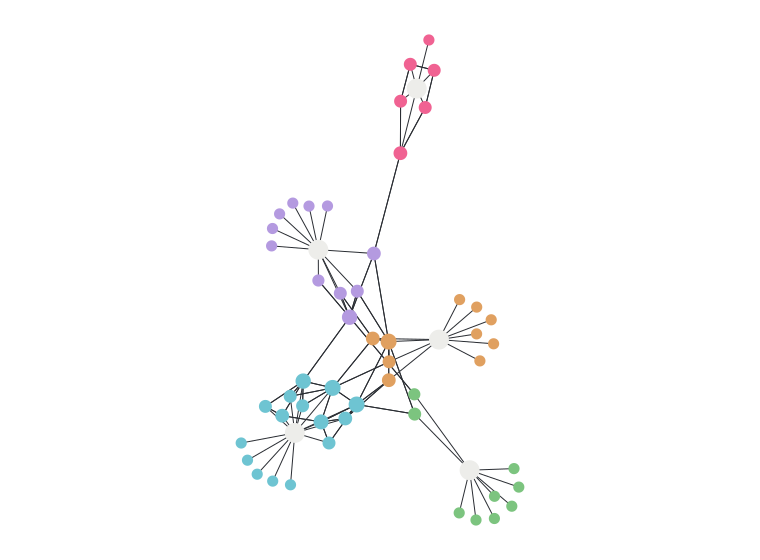
The essays, as a graph you can walk.
A living wiki built from everything on this site: 51 notes across five themes, each with a dated source and a review state. Drafted by an LLM librarian in the Open Knowledge Format, checked in CI, reviewed by me, rebuilt on every merge.
- Notes
- 51
- Connections
- 148
- Themes
- 5
Ideas I've built and stand behind
All initiativesLatest writing
Essays and short notes on putting AI to work inside regulated institutions. Every piece is dated and kept current.
All writing and notes- Oct 18, 2026Six runs, one canary: what it takes to let a model touch a knowledge graphAdding LLM entity extraction to my public knowledge graph took six CI runs. Five failed, and four of the failures looked like success. The fix was not a better model. It was a build that refuses to report a result it cannot prove.Context engineeringEssay · 8 min read
- Sep 15, 2026Self-describing knowledge: why the Open Knowledge Format matters, and what enterprises must addIn June, Google Cloud published the Open Knowledge Format, and July's v0.2 added provenance, verification and freshness. It is the right foundation. Regulated enterprises still need to add ownership, classification and a policy for how much trust an agent needs before it acts.Context engineeringEssay · 7 min read
- Aug 18, 2026Passive capture: knowledge that writes itself, with humans who approve itDocumentation fails because it is a second job. The knowledge we need is already produced as a by-product of work: commits, tickets, incidents, reviews and decisions. Capture it passively, distill it, and keep a human approval gate before anything becomes trusted.Context engineeringEssay · 6 min read
- Jul 28, 2026The AI-native SDLC: when typing code stops being the bottleneckAI has made writing code cheap. Verification, trusted context and human judgment are now the scarce resources, and teams that redesign their lifecycle around them will pull away from teams that only add assistants.AI-native SDLCEssay · 6 min read
- Jul 21, 2026Not another data lake: context needs curation, not collectionThe tempting answer to fragmented context is to pour everything into one place. We tried that with data, and many lakes became swamps. A context layer has to be a curated overlay: retrieval-first, owned, and pointing back to the systems that hold the truth.Context engineeringEssay · 6 min read
Playbooks
Checklists for running AI in a regulated enterprise, each with a two-minute self-assessment.
Start here
New here? Five themes, the best pieces in each.
Context engineering
Trusted, governed knowledge that people and agents can rely on.
Governed AI
Guardrails, provenance and policy enforced by design.
AI-native SDLC
How software gets built when agents write much of the code.
Data & AI platforms
The data and context foundations agents depend on.
Leading AI change
Turning AI from pilots into governed, measured programs.
A monthly note on AI in banking
One essay and three short notes, once a month. No spam, unsubscribe any time.
The first issue goes out soon. Until then, follow along on LinkedIn.
Follow on LinkedIn